
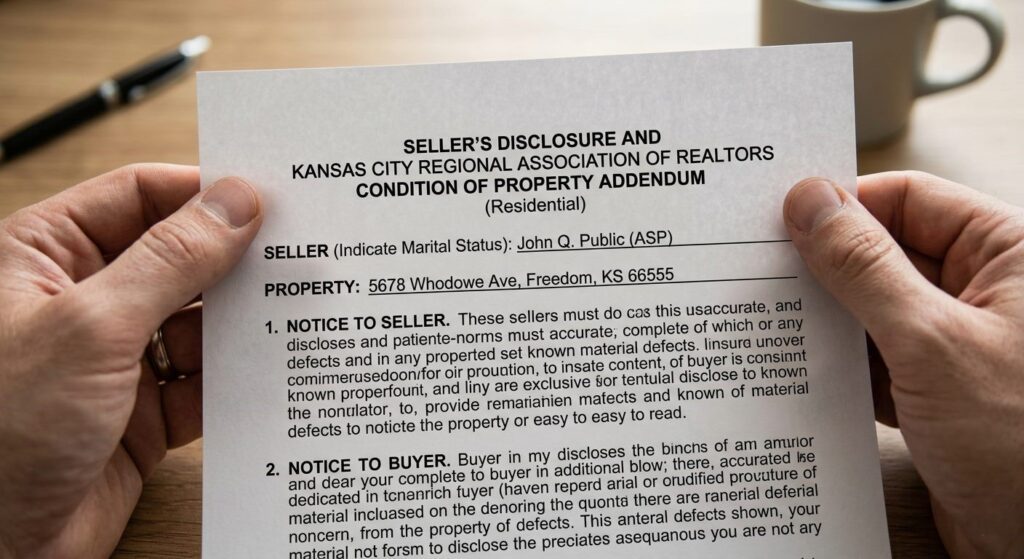
If you purchase a home in the Kansas City area, you’ll likely see a “Sellers Disclosure and Condition of Property Addendum (Residential)”, also known as the Seller’s Disclosure. This is a form completed by the seller(s) stating what they know about the condition of the house, age of its major components, as well as what’s included with the sale. It becomes part of the purchase agreement, but it’s also an upfront way to quickly learn important details about the house.
What the Disclosure Actually Is, or Isn’t
The seller’s disclosure includes a ton of valuable information for buyers, and it’s detailed in such a way to jog the seller’s memory about different things. However, it’s only as good as the seller’s best recollection and should not be used as a replacement for a professional home inspection. Further, sellers aren’t required to know what they don’t know. This is especially true with inherited houses where the sellers haven’t lived there recently. It’s ultimately the buyer’s job to do their own due diligence. That includes hiring a home inspector, researching schools, crime maps, zoning, and asking for clarification when something doesn’t make sense. This is especially true in Kansas or Missouri, which are both “buyer beware” states. Once you close, the house is yours; conditions and all. If you’re also a seller, check out How to NOT Get Sued When Selling Your House for more information about proper disclosure.
Catch Big-Ticket Items Early
Let’s start with the major systems. These are most expensive components of the house when it’s time to repair or replace them. Keep in mind, sometimes the seller doesn’t know the exact age or condition. This is just a starting point.
- Roof: type of material, age, repairs, number of layers, etc. Knowing a roof has 3 layers of shingles and is more than 15 years old is much different than a brand new roof with a transferrable warranty.
- Structure: are there foundation cracks, water intrusion, prior piering or bracing? Foundation problems are very common in the Midwest, and how they’re addressed is key.
- Heating & Cooling: ages of units, maintenance history, and any known problems. A modest HVAC replacement starts at $8,000–$15,000.
- Plumbing: material type and age matter here (polybutylene is a red flag, and clay sewers are prone to root intrusion), plus any disclosed leaks or backups. Sewer problems are very common in older homes.
- Electrical: fuse boxes vs. breakers, mis-matched aluminum wiring, old knob & tube can all be trouble. These things can also affect insurability.
Little Things Can Add Up
Here are some seemingly simple things that can actually add up when not addressed early.
- Infestation: termites, bed bugs, mice, etc. Infestations can cause property damage, health complications and sometimes be difficult to eliminate. Ask about active warranties or bait stations transferring to the buyer.
- Drainage and Flooding: these problems can lead to foundation damage, mold, and more. Being able to observe conditions during or soon after a heavy rain isn’t always possible, but it’s a smart thing to look for.
- Additions and Remodeling: was the work permitted? How much was done by a handyman or DIY?
- Sump Pumps: a robust sump pump installation can provide peace of mind, but might tell a bigger story. If there are water issues, have they been addressed properly?
Environmental Hazards (Don’t Skip This One)
Environmental hazards can be some of the most elusive problems within the home, leading to health issues and/or costly remediation. I say elusive because many times, these issues can go undetected and/or be difficult to find and eliminate. Here are a few of the most common:
- Lead-Based Paint: this one has it’s own addendum to the contract. If the home was built before 1978, Federal law requires sellers to disclose any known lead paint presence. This is particularly important if you have young children, plan to renovate, or know the house was recently renovated (did they follow EPA protocol?)
- Radon: radon is an invisible, radioactive gas that can seep out of the soil into your house, causing cancer over a long period of time. High radon levels are common in Kansas City. Luckily, mitigation is typically simple and inexpensive.
- Mold: mold can often go undetected and affect the air quality in your home. Moisture is the usual culprit.
- Underground tanks, landfill, contamination: Abandoned gas, or septic tanks are less common, but can get expensive quickly if the nearby soils are also contaminated. The EPA can get involved as these can impact ground water beyond just one property.
- Methamphetamine: If the house was ever used as a meth lab, it can leave behind toxic chemicals that seep into walls and floors.
For more information about common household hazards, and how to treat them, check out: Common Household Hazards: How to Identify and Fix Them.
HOA, Taxes and Special Assessments
These items can not only cost you a lot monthly, they can affect your loan qualification. Be sure you’re aware of:
- Taxes: Different parts of the metro have different tax rates, relative to the assessed value of the house. Keep this in mind when you’re looking at houses outside your normal search area.
- Homeowners Association (HOA): research new member fees, monthly or yearly fees and what services they pay for. Also look at any restrictions on the use of the property, and the financial health of the HOA (poorly managed or underfunded HOAs can be a disaster).
- Special Assessments: the county can temporarily add additional taxes to pay for special projects like sewer or storm water upgrades. You need to know what the assessments are now, as well as any additional assessments expected in the future.
What’s Included In The Sale?
This page is essentially a list of what’s included or excluded from the sale, and also what items the seller is letting you know don’t work. Here are the abbreviations used for each item:
OS: Operating and staying with the property (any item that is performing its intended function)
EX: Staying with the property but don’t ask for repairs or replacement (FYI: this item is likely broken or on its last leg)
NA: Not applicable (any item not present)
NS: Not staying with the property (sellers may plan to take the jungle gym, garage fridge and washer/dryer with them)
Many times, there are items not mentioned or forgotten by the seller. If the item is important to you, then the contract needs to spell out how you want them handled. For example, is the seller removing the broken hot tub? Are they leaving the integrated home theatre components? Make sure it’s reflected in the contract. For more information, check out: What’s Included in the Sale of a House?
Using the Disclosure to Shape Your Offer Strategy
All of this information is great, but how can you use it to shape your offer and negotiation strategy? It depends on what’s important to you, but the disclosure also tells you things about what’s important to the seller. They’re taking the jungle gym? That seems like a lot of work, so maybe the jungle gym has sentimental value to them. Asking them to leave it instead can set the tone for conflict. Or, you notice they’ve excluded the fireplace (EX)? That means they either haven’t ever used it, or have concerns about it. If having a working fireplace is important to you, just know there’s likely a cost to address potential issues (get bids during your inspection period). On the other hand, if you have a chimney repairman in your family, highlighting your willingness to accept the fireplace as-is can be a great way to entice the seller to accept your offer. These are just examples, but hopefully you can see the benefits of incorporating the disclosures into your strategy.
Bringing the Disclosure to Your Home Inspection
Make sure your agent provides a copy of the seller’s disclosure to the home inspector. Many inspectors have access to the MLS and review them anyway, but it’s good to be sure. The inspector will find most major issues without seeing the disclosure, but the information can: 1) highlight areas of concern, or 2) give the inspector more certainty and context when making recommendations.
Closing Thought
A seller’s disclosure has a lot of information packed into an eight-page form, but don’t let that overwhelm you. Work through it section by section, highlight anything that doesn’t add up, and bring those questions to your agent, your inspector, and the negotiating table. This information won’t necessarily tell you whether or not to buy a house. Rather, it tells you what questions to ask next. Remember, in real estate, the questions you never thought to ask are often the most expensive ones.
Ready to start the journey towards your next home purchase? Let’s schedule a time to chat!
Justin Rollheiser – Real Estate Agent
REALTOR®
Keller Williams Realty Diamond Partners, Inc.
13671 S Mur-Len St, Olathe, KS 66062
Cell 913-800-7653
Office 913-322-7500
www.JustinRollheiser.com
Comments or Questions?