
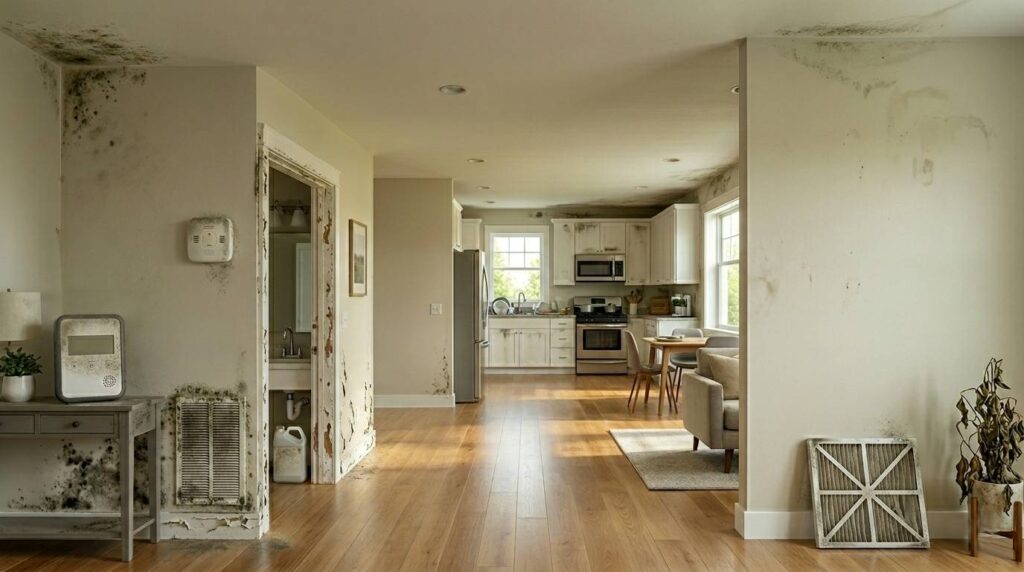
Did you know that Americans spend nearly 90% of their time indoors? For Kansas City homeowners, ensuring that your indoor environment is safe is a top priority. From radon in the soil to hidden mold, understanding common household hazards is essential for anyone navigating the KC real estate market. Below is a quick guide for how to identify and remediate the top risks. Whether you’re preparing for a home inspection or just performing routine maintenance, proactive care protects your health and your property value.
#1 Radon Gas
The EPA estimates about 21,000 lung cancer deaths can be traced back to radon exposure. Radon is a naturally occurring, colorless, odorless, and tasteless radioactive gas produced by the breakdown of underground uranium. The Kansas City metro is the EPA’s Zone 1, meaning we have a high potential for elevated levels. However, there’s no way of knowing if you have elevated radon levels without testing. Two houses on the same block can have wildly different radon levels, despite their proximity, and those levels can fluctuate throughout the year. That means even if your neighbor doesn’t have radon, there’s still a chance you might.
How to Test: You can have the home professionally tested. This is the most common method when purchasing a home when a radon mitigation system isn’t already in place. This testing costs around $100-$200. If this is for your house, you may consider buying a home test kit or electronic monitoring device. EPA recommends keeping radon levels in your house below 4.0 pCi/L (picocuries per liter).
How to Treat: The most common method of controlling levels in your house is by installing a radon mitigation system. It’s a simple set of pipes with a fan that sucks radon gases from below your foundation and vents them outside before they can enter your home. Most systems also have a gauge to ensure the system is working as intended. Mitigation system installations in the Kansas City area generally cost between $1,000-$2,500, possibly more depending on the complexity.
Additional Resources: Radon in Kansas and Radon in Missouri
#2 Mold & Moisture
As many as 50% of households have some level of mold or moisture issues. Beyond the structural damage water can cause to your home, mold can trigger a wide range of health sensitivities. Mold affects people very differently, but the causes are all similar. Issues stem from roof, drainage or plumbing leaks, lack of proper attic ventilation, or “thermal bridging” where temperature differences between indoor and outdoor air cause condensation on walls or windows.
How to Test: Start with a visual inspection of “wet” areas like basements, under sinks, and around windows. If you smell a musty odor but see nothing, you can hire a professional to test your air quality or use an infrared camera to find hidden moisture behind walls. I’ve even seen companies in Kansas City use a mold-sniffing dog to find hidden issues!
How to Treat: The golden rule is: you cannot fix mold until you fix the moisture source. This might mean repairing a leak, installing a dehumidifier, or improving bathroom and attic ventilation. Once you’ve fixed the moisture issue, you can proceed to remediating the mold. Small areas (less than 10 sq. ft.) can sometimes be cleaned with soap and water, but larger infestations require professional remediation. Refer to the EPA’s best practices and standards for mold remediation.
Additional Resources: EPA Guide to Mold and Moisture
#3 Carbon Monoxide
Often called the “silent killer,” carbon monoxide (CO) is responsible for over 400 deaths and 15,000 emergency room visits each year in the US. Carbon monoxide is a byproduct of combustion from gas furnaces, water heaters, fireplaces, or idling vehicles in garages. Because it is colorless and odorless, it is nearly impossible to detect without technology.
How to Test: The only reliable way to “test” for CO is by having functional, UL-listed carbon monoxide detectors on every level of your home and near every sleeping area. Ideal mounting locations may differ from smoke alarms, so be sure to pay close attention to the manufacturer’s instructions.
How to Treat: If an alarm sounds, get everyone outside immediately and call 911. To prevent issues, have your fuel-burning appliances (furnace, water heater, fireplace) professionally inspected and tuned up every year before the winter heating season begins.
#4 Volatile Organic Compounds (VOCs)
VOCs exist in virtually 100% of modern homes. These are organic chemicals that “off-gas” into the air at room temperature. They are commonly found in new carpets, vinyl flooring, composite wood furniture, and fresh paint. While the “new house smell” is often VOCs, long-term exposure can lead to headaches and respiratory irritation.
How to Test: While professional air quality monitors can measure total VOC levels, most homeowners identify them by the chemical odors following a renovation.
How to Treat: When painting or installing new flooring, choose products labeled “Low-VOC” or “Zero-VOC.” Increase ventilation by opening windows during and after any home improvement project, and consider using air purifiers equipped with activated carbon filters. Off-gassing should naturally diminish over time.
#5 Lead-based Paint
Before its ban in 1978, lead-based paint was common in residential construction. The HUD (Department of Housing and Urban Development) estimates about 34.6 million homes still contain lead-based paint. While it’s generally safe if left alone, it becomes a major hazard when it begins to peel, crack, or is sanded during a renovation. Lead exposure is linked to serious developmental issues in pregnant women and young children.
How to Test: If your home was built before 1978, you can buy a DIY lead-check swab at hardware stores for a quick check. For a more comprehensive look, hire a certified lead inspector who uses XRF (X-ray fluorescence) technology.
How to Treat: The most important rule is don’t disturb it. If you plan to renovate, hire an EPA-certified “Lead-Safe” contractor. They use specific containment and HEPA-vacuum methods to ensure lead dust doesn’t contaminate your living space.
Additional Resources: EPA Lead Information
#6 Pests / Allergens
Beyond being a nuisance, pests like cockroaches and mice are significant sources of indoor allergens. Droppings and saliva from these pests can trigger severe asthma attacks, especially in children. In the Kansas City area, common household pests often seek shelter indoors during the transition from fall to winter.
How to Test: Look for “signs of life” in dark, damp areas: droppings, chew marks on food packaging, or egg casings in the corners of cabinets.
How to Treat: Seal entry points with steel wool or caulk, eliminate standing water, and keep food in airtight containers. If an infestation is established, professional baiting and trapping are more effective than over-the-counter foggers. Once your area has been disinfected, you should consider using an enzyme cleaner that will keep future pests from following scents left during prior infestations.
#7 Household Chemicals
There are roughly 125,000 household chemical accidents per year in the US, ranging from improper mixing of cleaners (like bleach and ammonia) to accidental ingestion by children. Many homeowners store years’ worth of old paint, pesticides, and flammable liquids in garages or under sinks, creating a silent fire and health hazard.
How to Test: Perform a “chemical audit” of your home once a year. Check for leaking containers, expired products, or items stored near heat sources.
How to Treat: Store all chemicals in their original containers with labels intact, out of reach of children. For disposal, never pour chemicals down the drain. Utilize local “Hazardous Household Waste” (HHW) drop-off sites provided by your city or county.
Additional Resources (HHW Drop-off): Clay County, Jackson County, Johnson County, Leavenworth County, Miami County, Platte County, Wyandotte County,
#8 Asbestos
Like lead, asbestos was considered a “miracle material” for its fire-resistant properties. It is most commonly found in homes built between 1940 and 1980. You’ll typically find it in “popcorn” ceilings, vinyl floor tiles, and the white “tape” wrapping old steam pipes. It is generally not a health risk unless it is disturbed and becomes airborne.
How to Test: You cannot identify asbestos just by looking at it. If you are planning a renovation on an older home, you must have a professional take a small sample for lab analysis.
How to Treat: If the material is in good condition, the best “treatment” is to leave it alone or “encapsulate” it (covering it with a new layer of flooring or drywall). If it must be removed, you must hire a licensed asbestos abatement professional to prevent dangerous fibers from filling your home.
In Closing
If this list of household hazards seems a bit overwhelming, don’t be discouraged. Whether you’re a long-time homeowner or a first-time buyer in the Kansas City area, the goal isn’t to be alarmed, but to be informed. Most of these hazards are common, detectable, and, most importantly, fixable. By staying proactive with testing and maintenance, you aren’t just protecting your home’s resale value; you’re protecting the people who live inside it.
Final Pro-Tip
If you’re currently in the middle of a real estate transaction, use this list as a guide for your home inspection period. Don’t be afraid to ask for specialized tests for things like radon or mold. It’s much easier (and often cheaper) to negotiate these repairs before you sign the closing papers.
Stay safe and savvy!
Justin Rollheiser – Real Estate Agent
REALTOR®
Keller Williams Realty Diamond Partners, Inc.
13671 S Mur-Len St, Olathe, KS 66062
Cell 913-800-7653
Office 913-322-7500
www.JustinRollheiser.com
Comments or Questions?