
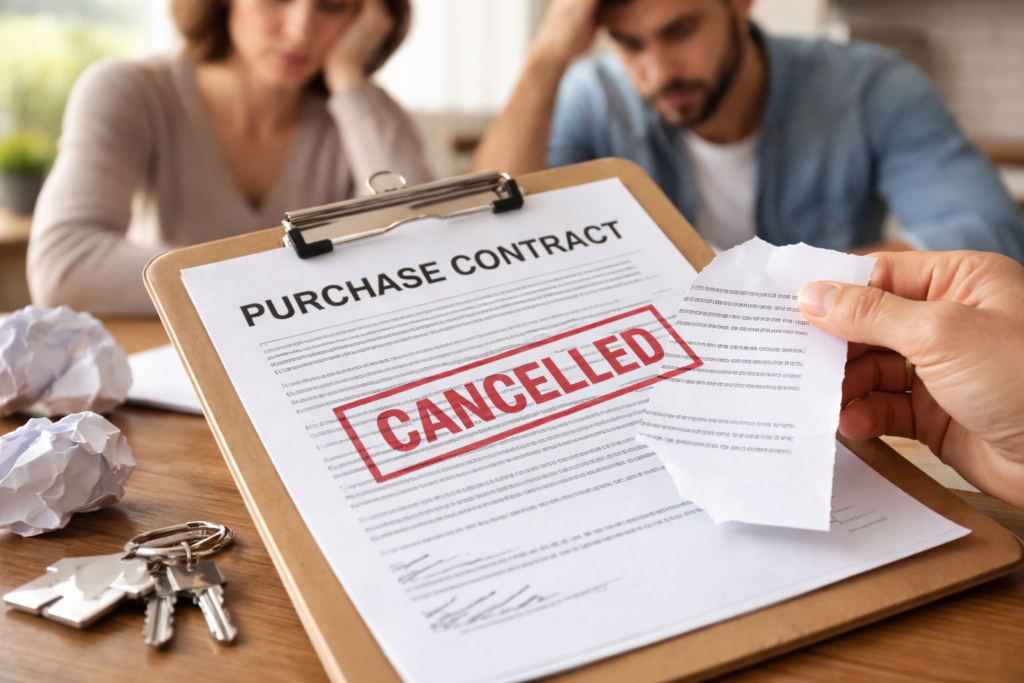
When a buyer and seller agree to a deal, it’s a great feeling for everyone. For buyers, it means the hunt is over; for sellers, it signals the finish line is in sight. But the reality is that between contract acceptance and closing, plenty can still go wrong with a home sale. Even promising deals can fall apart over inspections, financing hurdles, appraisal gaps, or simply shifting buyer confidence.
Over the years, I’ve learned to spot the things that can bring an otherwise perfect home sale to a screeching halt. It’s always highly frustrating for buyers and sellers. In this post, I’ll break down the most common reasons contracts fall apart, drawing from my direct experience in the Kansas City metro area. We’ll cover the big culprits like inspections, financing, and appraisals, plus emerging issues like buyer’s remorse, and wrap up with practical advice to help avoid these pitfalls during your home sale or purchase.
The Top Reasons Deals Collapse
In my experience, most failed contracts boil down to a few key issues. These aren’t just theoretical; I’ve seen them myself and they’re the same things buyers and sellers are experiencing nationwide. Let’s rank and explore the top three, based on my experience in the Kansas City market.
1. Home Inspection Surprises (The Biggest Culprit in Failed Home Sales)
Hands down, issues uncovered during home inspections are the number one reason buyers back out. Sometimes, these are genuine unknowns. Such as hidden problems like foundation cracks, outdated wiring, or roof damage that no one anticipated. But other times, it’s the small things a.k.a. “death by 1000 cuts” that overwhelm buyers. Inspection reports can be exhaustive, listing everything from minor cosmetic fixes to major repairs, and if a buyer already feels like they’re stretching their budget in a competitive market, that can feel like the final straw.
For first-time buyers especially, this is tough. They’ve battled bidding wars or high prices, and then the inspection hits them with a reality check. I’ve had clients who were excited about a “charming fixer-upper” only to realize the “charm” included costly plumbing overhauls. Sellers, if you’re reading this: consider what repairs you’re willing to tackle before listing. Major issues don’t just vanish. Even the most zealous buyers can walk away. Then you’re left with no option other than putting the house back on the market, which can raise red flags for future prospects.
Pro tip: If you’re selling “as-is,” price it to attract the right buyer, like a contractor who sees value in the flaws. If selling “move-in ready”, be careful to not over-improve (you could be throwing money down the drain). Instead, focus on essentials: safety, structure, cleanliness, and easy wins like fresh paint or updated fixtures.
2. Financing Fiascos
Next up is financing falling through, which can happen for a couple of main reasons. First, a buyer’s financial situation can change unexpectedly. Maybe they lose a job or rack up new debt on credit cards after their pre-approval. I’ve seen this more than once; excitement leads to impulsive purchases, and suddenly the lender’s underwriter pulls the plug.
Second, and frustratingly common, is when the lender doesn’t do their homework and mismatches the buyer to the wrong loan product. This can be seen with online lenders who may issue quick pre-approvals without properly verifying credit and income. Their approval process may seem easy, and the rates might look low, but underwriting reveals the truth at the 11th hour. This is why I always stress getting fully pre-approved through a quality, local lender early. You’ll find out their process is solid and their rates are more realistic (often with lower fees in the end).
Buyers need a solid financing contingency in their offer. In our KC metro area, the standard KCRAR contract (used by most agents) includes one by default, but make sure your loan is fully approved or denied before your contingency expires. Without it, you’re risking earnest money if things go south.
3. Appraisal Shortfalls
The third big one is when the home doesn’t appraise at the contract price. This is especially prevalent in hot markets where prices rise faster than appraisers can confirm with comparable sales (comps). If a buyer wants to pay more than the actual comps reflect, they need a bigger down payment to bridge the gap. Otherwise, the lender won’t fund the full amount.
Condition plays a role here too. Appraisers check for minimum standards, like safety and structural integrity. Loans like FHA, USDA, and VA have more specific requirements (e.g., no loose handrails, cracked glass, or peeling paint), while conventional loans are generally more forgiving; but not without limits. Even defects you as the buyer are OK with could be an issue for the lender if the appraiser observes them while at the property. When that happens, your home purchase could be dead in the water.
In a seller’s market, sellers might refuse repairs, figuring another buyer will come along. But I advise against buyers making their own repairs pre-closing. It’s risky for sellers and buyers. If you know repairs are needed upfront, consider light rehab loans, where you can escrow money for repairs to occur after closing by a contractor of your choice. These loans can be useful, but can be more complicated. It’s best to plan for them from the start.
The Rise of Buyer’s Remorse
In recent years (especially post-2020) with skyrocketing prices and interest rates, buyer’s remorse has become more frequent. Buyers often feel stretched thin just to afford the home, and an inspection report amplifies doubts. This hits first-time buyers hardest; their options have been limited, and bailing on a deal can feel devastating emotionally and financially.
Thankfully, as of 2026, the market is balancing out. Homes still sell quickly, but with fewer competing offers. Overpriced or poorly conditioned properties sit longer and often require price reductions. This gives buyers peace of mind to not rush through the process. However, preparation is still key in a seller’s market.
Broader Insights: Unrealistic Expectations and Market Dynamics
Most deals that fall through trace back to unrealistic expectations: sellers underestimating defects with their home or buyers biting off more than they can chew. Poor communication exacerbates it; everyone needs to be honest upfront. Sellers can only push buyers so far, and buyers shouldn’t overextend or be unrealistic.
The market has evolved since 2020. Back then, low inventory and bidding wars amplified these issues. Now, it’s more balanced: Quick sales persist, but buyers have breathing room. Overpriced homes languish, forcing larger price adjustments. This is good news: it means fewer remorse-driven cancellations and more realistic negotiations.
How to Your Prevent Home Sale from Falling Apart
Prevention starts with preparation.
For buyers:
- Get fully underwritten financing early, and include a contingency to protect yourself.
- Always include an inspection contingency. A 10-day inspection & a 5-day resolution window is common.
- Realize all homes have defects, even new construction!
- Don’t stretch too thin; factor in potential repairs from day one.
For sellers:
- Disclose issues legally to avoid lawsuits, but know inspections will reveal more.
- For some , having your home pre-inspected is a good option for reducing the chance of any surprises.
- Making strategic repairs upfront allows you to control the process before you scare off your best buyers.
- If going “as-is,” market to buyers who value potential (e.g., investors or DIYers).
- Listen to your agent. Make adjustments to pricing or condition quickly if the market pushes back.
Both sides: Trust your agent when they provide insight into these situations. You’re in control, but they advise how to control your variables, as well as likley outcomes.
In the end, real estate is about people as much as properties. By understanding these common pitfalls and planning ahead, you can turn potential disasters into smooth closings. If you’re in Kansas or Missouri and need guidance, feel free to reach out. I’ve been there, and I’m here to help.
WHAT’S MY HOME WORTH?
Justin Rollheiser – Real Estate Agent
REALTOR®
Keller Williams Realty Diamond Partners, Inc.
13671 S Mur-Len St, Olathe, KS 66062
Cell 913-800-7653
Office 913-322-7500
www.JustinRollheiser.com
Comments or Questions?