
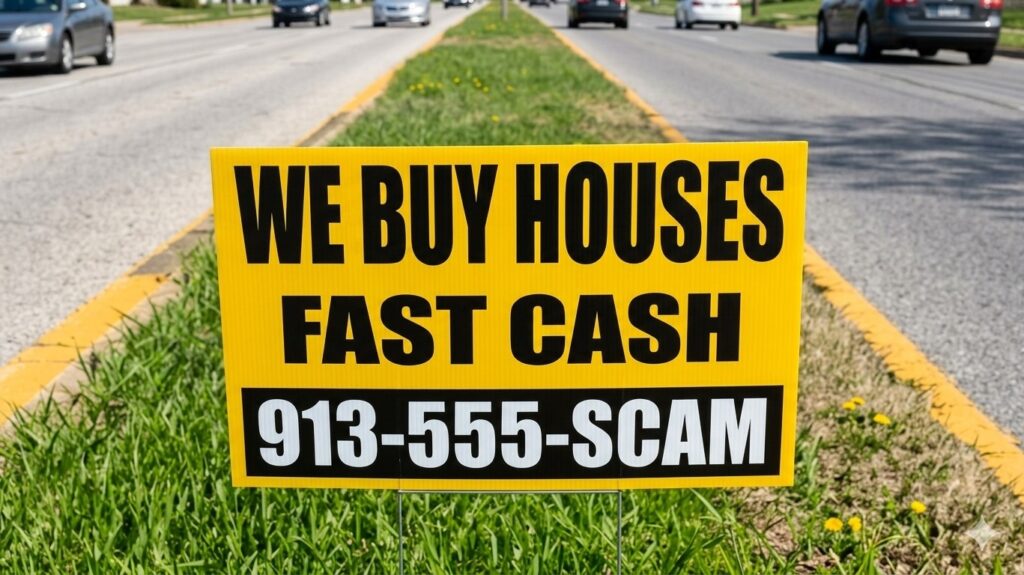
Wholesalers are people who sign contracts to purchase distressed properties, then flip those contracts to investors for a fee. It’s a technique real estate investing “gurus” teach as a starting point for beginners. Students are told they can get started with no money, no equipment, and no license. They just have to pay the “guru” for their “proven system”.
The problems with wholesaling typically revolve around high-pressure tactics, deception, and wholesalers failing to follow through on deals, leaving desperate sellers in a bad predicament. Some wholesalers even file liens on the properties involved, and then vanish when they can’t close the deal as promised.
In practice, a wholesaler acts as a middleman, operating without a real estate license while marketing properties they don’t own, soliciting offers, and positioning themselves as an intermediary to convince distressed sellers to accept a below-market price. What they rarely disclose upfront: they have no intention of buying the home themselves. Instead, they hope to find a third-party buyer and close both transactions simultaneously. When those deals fall apart, which they often do, unsuspecting sellers are left with clouded property titles and significant legal headaches.
Fortunately, Kansas and Missouri are starting to take notice, and regulators in both states are beginning to crack down.
Difference Between Investors and Wholesalers
Have you received calls from foreign call centers asking to buy your house? Or mailers that look like personalized checks, but turn out to just be lowball offers? While this type of communication has historically come from investor buyers, there’s a growing likelihood the person behind them is actually a wholesaler.
Advertisements like “we buy ugly houses” or “fast cash for your home” have traditionally been the calling card of investors who plan to purchase, repair, and either resell or rent out the property. Most sellers understand that going this route means leaving some money on the table, but sometimes speed, privacy, or convenience matters more than top dollar.
So what’s the difference between an investor and a wholesaler? Simply put: investors are the actual buyers. Wholesalers are middlemen who market properties for sale without a broker’s license. They never intend to purchase the home themselves, despite what they say. Because they have no real skin in the game, wholesalers can be quick to walk away, often leaving sellers in a difficult position.
Investors, by contrast, serve a legitimate and valuable role in the real estate ecosystem. They purchase homes that typically need more work than the average buyer can handle, and that most banks won’t finance. In many cases, the investor is the only way a seller walks away with something rather than nothing. Investors also restore properties back to livable condition which adds to the housing supply.
Why Wholesalers Can Be A Problem
I don’t have a problem with wholesaling in general. Adults should be free to do honest business as they please, but many of these wholesalers are deceptive, unprofessional, and do more harm than good. Specifically, here are some issues I have with wholesalers:
- Deceptive Marketing / Bait & Switch Tactics: Wholesalers often send mass mailers disguised as personalized checks with specific cash offer amounts to lure vulnerable homeowners. Once a seller responds, they frequently reduce their offers, citing ‘needed repairs’. They sometimes lower the offer multiple times if they’re unable to find a buyer at the right price or are simply testing what the seller will accept.
- Targeting Vulnerable Sellers: Wholesalers deliberately seek out homeowners in distress: people facing foreclosure, probate, divorce, or financial hardship. Elderly homeowners are particularly at risk. High-pressure tactics that might raise red flags for a savvy seller can be genuinely overwhelming for someone in crisis, grieving, or unfamiliar with real estate contracts. Some wholesalers know this and count on it.
- Clouding Titles: One of the worst practices used by wholesalers is filing liens on properties to claim a legal interest, and trapping sellers in one-sided contracts that prevent them from selling their property in the future.
Why No License Can Be A Problem
Despite presenting themselves as buyers, wholesalers are really just marketing properties to find a third-party purchaser, essentially matching buyers and sellers and collecting a fee in the middle. That’s brokering real estate which has required a real estate licence in Kansas since 1947 and 1941 in Missouri. Without one, there’s no state oversight and no legal obligation to act in a seller’s best interest.
Kansas is Currently Suing One Wholesale Company
Attorney General Kris Kobach is currently pursuing a civil enforcement action under the Kansas Consumer Protection Act (not criminal). I won’t mention the company by name, but you can easily look it up. His office alleges this company operated without required real estate licenses while engaging in deceptive and predatory practices disguised as a “cash home buyer” service promising fast, fee-free, commission-free sales. Key allegations include:
AG Kobach stated: “[This company] is a scam disguised as a service. They sent fake checks to hard-working Kansas homeowners, promised a simple real estate sale with no fees, and used intimidation and false liens to extract consumers’ equity. We allege that they operate without appropriate licenses, misrepresent their offers, and hide their fees and commissions.” source: fox4kc.com
How to Spot a Wholesaler
Here are some ways to identify a wholesaler:
- The purchase contract includes assignment language allowing the wholesaler to transfer the contract to another party
- The “buyer” is vague about their financing or can’t provide proof of funds
- They pressure you to sign quickly, before you’ve had time to review the contract
- The offer is surprisingly high upfront, then gets reduced after inspection
- They found you through an unsolicited mailer, cold call, or a “personalized check”
Get A 2nd Opinion Before Signing Anything
Before signing anything, get a second opinion from a licensed real estate agent. A good agent will listen to your goals, give you an honest assessment of your home’s as-is value. They can also walk you through what to realistically expect from a traditional listing (with no obligation). Even if you ultimately decide to sell to a cash buyer, going in informed is always the right move. When in doubt, give your agent a call to discuss.
SEARCH HOMES FOR SALE
WHAT’S MY HOME WORTH?
Justin Rollheiser – Real Estate Agent
REALTOR®
Keller Williams Realty Diamond Partners, Inc.
13671 S Mur-Len St, Olathe, KS 66062
Cell 913-800-7653
Office 913-322-7500
www.JustinRollheiser.com
Comments or Questions?