
Most people choose their home based on lifestyle needs more so than investment potential. But some first-time homebuyers reverse that logic.
I started my own real estate investing journey this way back in 2007 using a strategy now called “House Hacking”. It wasn’t a new concept back then, but the term wasn’t really popularized until around 2013 by the BiggerPockets podcast.
House hacking is a strategy where you buy a home that doubles as a rental property. You live in part of it and collect rent on the rest. That rental income offsets your housing costs; sometimes entirely.
It’s one of the more creative ways to approach homeownership, and it’s worth a look if you’ve ever considered owning rental property.
How House Hacking Works
The two most common ways to House Hack:
Renting out rooms in a your home. You buy a house, live there, and rent spare bedrooms to one or more roommates. The rental income helps cover your mortgage payment. This is the simplest version to execute and requires no special property type.
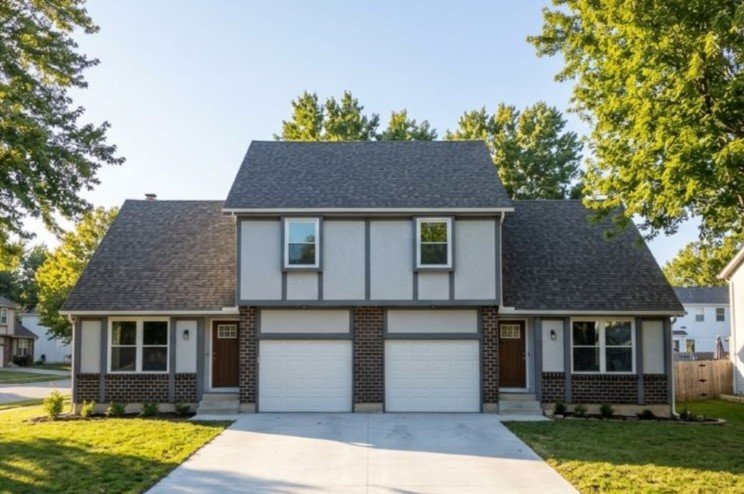
Buying a small multi-unit property. A duplex, triplex, or fourplex lets you live in one unit while renting out the others. This version typically produces more income and offers more privacy since you’re not sharing living space. You also still qualify for owner-occupied financing, which is a bigger deal than it might sound.
The Financing Advantage
When you buy a property as your primary residence, you can qualify for owner-occupied loan programs. FHA loans allow as little as 3.5% down, and conventional owner-occupied loans can go as low as 5% down, even on a duplex, triplex, or fourplex. Interest rates on owner-occupied loans are also lower than investment property loans, sometimes by nearly a full percentage point.
Compare that to a traditional investment property loan, which typically requires 15-25% down, carries a higher interest rate, and has stricter qualification requirements. The differences can be significant.
On a $350,000 duplex, for example, the gap between a 3.5% FHA down payment and a 20% investment property down payment is roughly $57,000. And on that same loan, a 1% difference in interest rate translates to roughly $250/mo savings in mortgage payments.
The one requirement: you need to intend to live in the property for at least one year (sometimes longer, depending on the lender). Using owner-occupied financing without a genuine intent to occupy is mortgage fraud.
What the Numbers Can Look Like
The savings can vary a lot depending on your market and the property, but to give you a sense of scale:
Say you buy a duplex for $350,000 with an FHA loan at 3.5% down. At current interest rates, your total housing cost (mortgage, taxes, insurance) might run around $2,800-3,200 per month. If the other unit rents for $1,500, your out-of-pocket cost drops to $1,300-1,700 per month. That’s a 40-50% reduction in your housing expense compared to paying the full amount yourself, and you’re building equity the whole time with appreciation and debt paydown.
In some cases, particularly with triplexes and fourplexes in areas with strong rents, the rent can cover the entire mortgage, sometimes with cash left over starting day one.
The Real Tradeoffs
You’re a landlord. Whether you’re renting rooms or units, you have tenants. That means screening applicants, writing leases, collecting rent, handling maintenance requests, and occasionally dealing with difficult situations. It’s manageable, especially starting with one or two tenants, but it’s not for everyone.
Proximity matters. Living next door to your tenant or sharing a house with them blurs lines that don’t exist in traditional landlord-tenant relationships. Tenants may knock on your door at odd hours. You’ll see their habits. They’ll see yours. Setting clear expectations upfront about communication channels, maintenance response times, and mutual privacy goes a long way. But it’s still a different experience than being a landlord from across town.
Not every property is a good house hack. The rental income has to make sense relative to the purchase price. Running the numbers on specific properties before you’re under contract is essential. A good agent and a lender who understands this strategy can help you evaluate whether a deal actually works.
The Snowball Effect
After living in the property for a year or more, you’re free to move out. At that point, the unit you were living in becomes a rental, and you have a fully cash-flowing investment property. Meanwhile, you can repeat the process: find another property, move in with owner-occupied financing, and do it again.
Each cycle builds on the last. The cash flow from the first property helps fund the down payment on the second. The second adds more income. Over time, a lot of serious real estate investors trace their portfolios back to one small multi-unit they lived in early on. See How to Have No House Payment by Age 30.
Is House Hacking Right for You?
If your priority is a quiet home with no landlording responsibilities, house hacking probably isn’t a fit. Truthfully, most first-time buyers feel the same way.
But if you’re open to trading some comfort for a lower housing expense and a foothold in real estate investing, it’s one of the most accessible strategies available to first-time buyers. The financing terms are favorable, the entry point is lower than traditional investment properties.
If you’re curious whether it could work for your situation in the Kansas City market, I’m happy to talk through what properties and price points tend to make sense.
Justin Rollheiser – Real Estate Agent
REALTOR®
Keller Williams Realty Diamond Partners, Inc.
13671 S Mur-Len St, Olathe, KS 66062
Cell 913-800-7653
Office 913-322-7500
www.JustinRollheiser.com
Comments or Questions?