
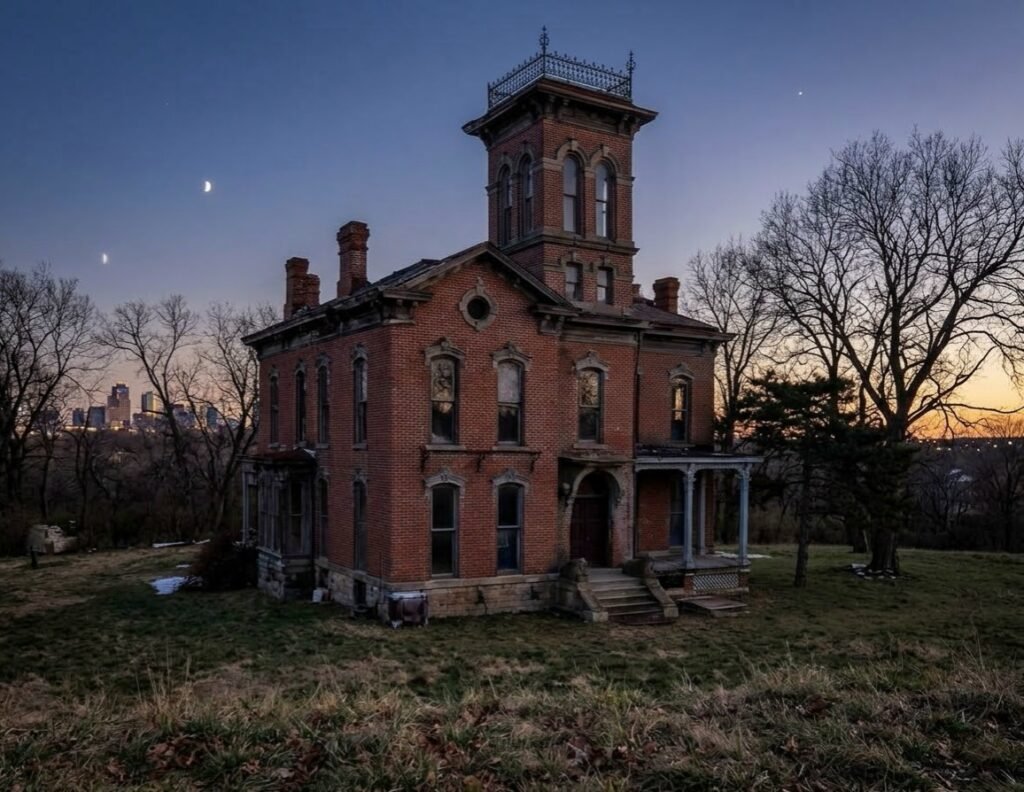
The history behind most houses is fairly boring. The roof was replaced in 2020. The appliances are two years old. Some homes, though, carry stories that never appear on an inspection report: a death, a crime, or rumors of strange things happening after dark. Some people even believe their homes are haunted.
As we’ve covered in How to NOT Get Sued When Selling Your House, sellers in Kansas and Missouri are required to disclose certain material facts about their house to potential buyers. A material fact is any piece of information that could influence a reasonable person’s decision to buy, sell, lease, or change the price or terms of a purchase.
However, what a seller must disclose is sometimes different from what they should disclose. That’s because (1) the law isn’t always clearly defined, and (2) you can be sued for almost anything.
The Legal Floor: What the Law Says
Real estate people call these “stigmatized” or “psychologically impacted” properties: homes buyers may shun for reasons that have nothing to do with the physical condition of the structure.
Missouri addresses this head-on. Under § 442.600, the fact that a property was the site of a homicide, another felony, or a suicide is not a material fact that must be disclosed. The statute also protects agents and brokers from lawsuits for failing to disclose it. The same law covers homes where an occupant had HIV/AIDS or another disease not transmitted through occupancy (can you tell this law was passed in 1991?).
Kansas has no laws on stigmatized property, and the common guidance is that sellers must disclose material defects but aren’t strictly required to share psychological history. The Kansas Association of REALTORS® recommends disclosure anyway.
Rule #1: If They Ask, Tell the Truth
A seller or agent who answers a direct question falsely, such as “Has anything happened in this house?” can face a misrepresentation claim even where silence would have been legal. The REALTOR® Code of Ethics specifically prevents it’s agents from exaggeration, misrepresentation, or concealment of pertinent facts.
The practical takeaway: you may be able to stay quiet, but you can’t lie about the facts.
The “Murder House” Problem
When most people hear “stigmatized home,” they picture one thing: a death or a crime inside the house. Missouri’s law says sellers don’t have to mention it, and Kansas has no clear rule either way. That sounds like good news for sellers, until a buyer finds out after closing.
A now-famous Wichita story shows why. In 2002, Diane Boyle bought a 1940s bungalow on South Hydraulic Street. Months later, she learned that the BTK serial killer had murdered a woman there in 1977. She says her real estate agent never mentioned it.
Kansas law didn’t clearly require anyone to tell her. At the time, the head of the Wichita Area Association of REALTORS® told the New York Times that Kansas has no rule requiring disclosure beyond material facts, such as a leaking roof or unsound walls. He added that a BTK connection would be something buyers would want to know. Boyle said she was furious. Her anger wasn’t about a defect. It was about being the last person on her street to know. (New York Times, June 29, 2005, as excerpted by Freakonomics)
Boyle wasn’t the only Wichita homeowner to find out the hard way. Greg Lietz supposedly bought a small ranch home in Wichita and put out candy on his first Halloween, but no trick-or-treaters ever came. When he mentioned it to a neighbor, he reportedly learned why: four members of a family had been murdered inside the house, one of several Wichita homes linked to the BTK killings. (Homiletics, April 2006)
Contrast that with a seller in Park City, Kansas, who chose to disclose. The house was connected to BTK’s 1985 killing of a neighbor, Marine Hedge. Kansas law didn’t require disclosure, but the seller and listing agent made the history part of the sale, and the auctioneer reminded bidders of the murder before bidding began. With no reserve price, the house sold for $35,000, well below its roughly $60,000 appraisal. The agent said the seller was “trying not to profit from the misfortune,” and real estate experts quoted at the time called disclosure the right move. (Associated Press via KSAL; sale price)
Do You Have to Disclose a Haunted House?
Probably not, since the law doesn’t treat paranormal activity as a defect. But there’s an exception, and it comes from a famous New York case, Stambovsky v. Ackley (1991). It isn’t local and it doesn’t bind Kansas or Missouri courts, but it’s widely cited.
Stambovsky v. Ackley
A New York City buyer signed a $650,000 contract on a house in Nyack. Before closing, he learned the house was widely known in town as haunted. The seller, Helen Ackley, had told Reader’s Digest and the local paper about her family’s ghost encounters, and the house had even been included on a local walking tour. The buyer sued to get out of the deal. The trial court dismissed the case under “caveat emptor,” the buyer-beware rule, which in New York meant sellers generally had no duty to volunteer information about a property.
The appeals court reversed, over a dissent. Whether or not the house was truly haunted, it said, Ackley had publicized the haunting for years and couldn’t deny it now. A haunted reputation could hurt a home’s value and resale, and a buyer from out of town had no way to discover it on an inspection. The buyer couldn’t collect damages, but he could cancel the contract. The court treated this as a narrow exception to buyer beware.
The lesson: If you’ve told the world your house is haunted, you should probably disclose that publicity to potential buyers.
Why Telling the Truth Is Often Smarter
Even when the law allows you to stay silent, there are good reasons to speak up:
- The internet remembers. News archives, true-crime sites, and neighborhood forums mean a buyer can discover your home’s history in minutes.
- Surprises cost more than stigma. A buyer who learns about a death from you may shrug. A buyer who learns from the neighbor after closing may call a lawyer.
- Trust helps negotiations. Upfront honesty tends to shorten the conversation rather than kill the sale.
- You control the framing. Sometimes the truth is much less sensational than the rumors, and you’re likely the better person to tell the story.
The Bottom Line
The law in Kansas and Missouri gives sellers a lot of room to stay quiet about a home’s darker chapters. But smart sellers don’t ask “what can I get away with?” They ask “what would buyers reasonably want to know before buying?”
Because the only thing scarier than a ghost in the attic is a lawsuit from a buyer.
This article is for general information only and isn’t legal advice. Consult a licensed attorney about your specific situation.
Justin Rollheiser – Real Estate Agent
REALTOR®
Keller Williams Realty Diamond Partners, Inc.
13671 S Mur-Len St, Olathe, KS 66062
Cell 913-800-7653
Office 913-322-7500
www.JustinRollheiser.com
Comments or Questions?